Басты бетке
820К+ науқас 2014 жылдан бері көмек алды
50 елдер
1,500 емханалар
6K+ пікірлер
3K+ білікті дәрігер

Германияда кеудені ұлғайтудың бағасы қанша? Қазір біліңіз

Германияда кеудені ұлғайтуды орташа бағасы $6,500, ең төменгі — $4,500, ең жоғарғы — $8,500 құрайды.
Bookimed тарапынан June 2026 жылы дәлелденген деректер, 363 дүниежүзілік клиникалардан алынған науқастардың сұраныстары мен ресми баға ұсыныстарына негізделген. Орташа құн нақты шот-фактураларға (2025–2026) негізделген және ай сайын жаңартылады. Нақты бағалар өзгеруі мүмкін.

Bookimed-пен Сіздің артықшылықтарыңыз бен кепілдіктеріңіз

Клиникалардан тікелей бағалар және икемді бөлшектеп төлеу

Сіз Bookimed қызметтері үшін төлемейсіз. Сайттағы кеудені ұлғайтуды бағалары клиниканың баға тізіміне сәйкес келеді. Сіз жеткенде тікелей клиникада төлейсіз. Бөліктермен төлеу қолжетімді.

Тек тексерілген клиникалар мен дәрігерлер

Bookimed Сіздің қауіпсіздігіңізді қамтамасыз етеді. Біз тек кеудені ұлғайтудың жүргізу үшін жоғары халықаралық стандарттарға сәйкес келетін клиникалармен ғана жұмыс істейміз. Олардың бүкіл әлем бойынша халықаралық науқастарға қызмет көрсету үшін қажетті лицензиялары бар.

Тегін қолдау 24/7

Bookimed тегін көмек және қолдау ұсынады. Жеке медициналық координатор сапарға дейін, кезінде және кейін Сізбен байланыста. Кеудені ұлғайту процедурасы кезінде Сіз басқа елде жалғыз қалмайсыз.

Неліктен дәл біз?

Сіздің жеке дәрігер-координаторыңыз Bookimed

  • Барлық кезеңдерде қолдау көрсетеді
  • Қолайлы клиника мен дәрігерді таңдауға көмектеседі
  • Ақпаратқа жылдам және ыңғайлы қол жеткізуді қамтамасыз етеді

2026 жылы Маусым айындағы Германияда кеудені ұлғайтуға бойынша эксклюзивті ұсыныстарды жіберіп алмаңыз

Процедура түрі
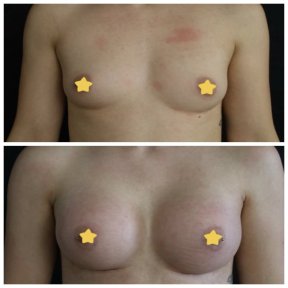
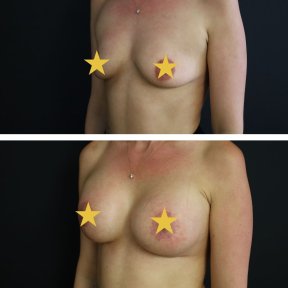
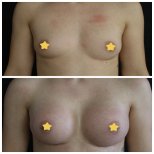
Before and after breast augmentation results at Esthétique du Nord, enhanced breast volume
Before and after breast augmentation results at Esthétique du Nord – enhanced breast volume
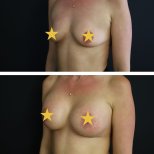
Before and after breast augmentation at Esthétique du Nord, visible volume increase result
Before and after breast augmentation results at Esthétique du Nord, enhanced breast volume
20 жылдар тәжірибе

Кеудені үлкейту "Basic"
  • Technique: Basic breast augmentation without the use of implants.
  • Walid Eljabu is triple board-certified in plastic aesthetic surgery, hand surgery, and trauma surgery, ensuring advanced anatomical expertise.
  • Esthétique du Nord is led by Dr. Eljabu, who trained at leading institutes in Sweden and Turkey for aesthetic procedures.
  • Included Services: Consultation with a plastic surgeon.
  • Stay Info: 1 day stay in the hospital room; hotel accommodation is not included in the price.
Сіз 8 пакеттік ұсыныстар ішінен 1 көрдіңіз

Германияда ең жақсы Кеудені ұлғайту клиникаларын ашыңыз: 8 тексерілген опциялар және бағалар

Bookimed клиникалар рейтингі data science алгоритмдеріне негізделген. Оның негізінде мынадай критерийлер жатыр: науқастардан сұраулар саны, пікірлер (оң және теріс), бағалар мен емдеу нұсқаларының өзектілігі, клиниканың жауап беру жылдамдығы және сертификаттардың болуы.

Германияда кеудені ұлғайтудың: сапар жоспары

Күн 1: Германияға келу
  • Германияға келгенде паспорт, медициналық карта және қабылдау туралы растама сияқты барлық қажетті құжаттардың қолыңызда екеніне көз жеткізіңіз.
  • Нөмірге орналасып, жол жүруден кейін демалыңыз. Бұл алдағы медициналық процедураларға дайындалуға көмектеседі.
  • Жергілікті аймақ пен клиникаға қатынау жолдарымен танысыңыз.
  • Денсаулығыңызды қадағалаңыз және алкоголь мен ауыр тағамдардан аулақ болыңыз. Бұл операция алдындағы тексеру кезінде денсаулығыңызды оңтайлы күйде ұстап тұруға көмектеседі.
Күн 2: Операция алдындағы консультация және тексеру
  • Операция алдындағы консультацияға жоспарланған клиникаға баруыңыз керек. Бұл қайталанған ісіктің бар-жоғын тексеру үшін ультрадыбыстық және мүмкін МРТ/КТ көмегімен маммологиялық тексеруден өтуді қамтиды.
  • Хирургпен имплантаттарды орнату немесе табиғи пішін беру үшін өз тіндеріңізді пайдалану арқылы біріктірілген әдістер сияқты нақты әдістерді талқылаңыз.
  • Процедура, қалпына келтіру және кейінгі күтім туралы сұрақтарыңызды қойыңыз.
  • Операцияға дайындалу үшін азық-түлік және қолданбау керек дәрі-дәрмектерге қатысты шектеулерді қамтитын егжей-тегжейлі операция алдындағы жоспар мен нұсқаулар алыңыз.
Күн 3-6: Операцияға дайындық
  • Хирургтың кейбір дәрі-дәрмектерді қабылдауын тоқтату немесе диетаны өзгерту сияқты нақты нұсқауларына сәйкес әрекет етіңіз.
  • Жеңіл белсенділікпен айналысыңыз және көп физикалық жүктемеден аулақ болыңыз. Бұл денеңізді операцияға оңтайлы күйде ұстауға мүмкіндік береді.
  • Операция күні клиникаға және кері қарай тасымалдауды ұйымдастырыңыз.
  • Үйіңізде операциядан кейінгі қалпына келтіру орнын дайындаңыз. Оған клиника ұсынатын арнайы киім (бюстие) сияқты барлық қажетті заттарды қосыңыз.
  • Кез келген сұрақтар немесе мәселелер туындаса, осы дайындық кезеңінде клиникамен байланыста болыңыз.
Күн 7: Операция күні
  • Грудь ұлғайту бойынша жоспарланған операцияға уақытында клиникаға келіңіз.
  • Операция алдындағы жоспарға сәйкес операция сол жақ төсті ұлғайту және оң жақ төсті тартуды қамтуы мүмкін.
  • Ес-түссіздену мен әдетте бірнеше сағатқа созылатын хирургиялық процедурадан өтіңіз.
  • Операциядан кейін қауіпсіз қалпына келтіруді қамтамасыз ету үшін стационарлық жағдайда 2-3 күн бойы бақылауда боласыз.
  • Медициналық персоналдың берген операциядан кейінгі күтім бойынша барлық нұсқауларын орындаңыз.
Күн 8-9: Операциядан кейінгі ауруханада болу
  • Ауруханада болу кезінде ерте операциядан кейінгі қалпына келтіруден өтіңіз және қалпына келтіруге ықпал ететін күтім алыңыз.
  • Демалыңыз және қозғалыс пен белсенділік бойынша медициналық командаңыз берген барлық ұсыныстарды сақтай отырып, денеңізді қалпына келтіруге мүмкіндік беріңіз.
  • Хирургпен қалпына келтіру барысын талқылап, сізді алаңдататын кез келген мәселелерді шешіңіз.
  • Шығуды жоспарлап, тұрғын үйге оралу үшін барлық қажетті дәрі-дәрмектер мен күтім нұсқауларының бар екеніне көз жеткізіңіз.
Күн 10: Шығу және қалпына келтіру
  • Клиниканың ұсыныстарына сәйкес өз үйіңізде қалпына келуді жалғастырыңыз.
  • Төсті емдеу кезінде қолдауға арналған арнайы киім (бюстие) киіңіз.
  • Жеңіл белсенділікпен айналысыңыз, ауыр заттарды көтеруден немесе көп физикалық жаттығулардан аулақ болыңыз.
  • Операция аймағын таза және құрғақ ұстаңыз. Инфекция немесе асқыну белгілерін қадағалаңыз.
  • Клиникамен байланысып, кетер алдында барлық қажетті кейінгі сапарларды ұйымдастырыңыз.
Күн 11-12: Кейінгі бақылау және кетуге дайындық
  • Қалпына келтіру барысын бағалау үшін барлық жоспарланған бақылау қабылдауларына қатысыңыз.
  • Ұзақ мерзімді күтім мен үйге оралғаннан кейін қажет қосымша баруларды талқылаңыз.
  • Болашақта пайдалану үшін барлық медициналық жазбалар мен процедура құжаттамаларының бар екеніне көз жеткізіңіз.
  • Үйге оралуға дайындық жасаңыз. Барлық жеке заттардың бар екеніне сенімді болып, сапарға дайындалыңыз.
  • Соңғы сұрақтар туындаса немесе кету алдында көмек қажет болса, клиникамен байланысыңыз.
Күн 13: Германиядан шығу
  • Нөмірден шығып, үйге қайта ұшуға әуежайға барыңыз.
  • Қалпына келтіруді жеңілдету үшін саяхат кезінде операциядан кейінгі күтім нұсқауларын орындауды жалғастырыңыз.
  • Хирург берген графикке сәйкес кейінгі визиттерді жоспарлаңыз
  • .

Bookimed, медициналық туризм саласындағы жетекші ғаламдық платформа, Германияда кеудесін ұлғайтуды қалайтын клиенттерге кез келген жағдайда сараптамалық көмек пен сенімді медициналық шешімдер ұсынуға ұмтылады. Интеллектуалды автоматтандырылған рейтинг жүйесі клиниканың ашық тізімдерін құрастыру үшін қолданылады, олар жасанды интеллект арқылы дәлдікті қамтамасыз ету үшін деректер өңдеу маманының көмегімен мұқият қолдау көріп отырады. Платформа шынайылықты қамтамасыз ету үшін емдеуден кейін нақты пациенттердің пікірлеріне жариялы түрде қолжетімді етеді. Bookimed клиникалардан алынған жаңартулармен бірге кешенді медициналық шешімдер ұсынады. Германиядағы кеуде ұлғайту жайлы контент тәжірибелі медицина авторлары тарапынан құрылған және мамандармен тексерілген, бұл Bookimed редакциялық ережелеріне сәйкес келеді және платформаның жоғары сапалы әрі түсінікті медициналық ақпарат ұсынуға деген тырысушылығын көрсетеді. Толығырақ ақпарат немесе сұрақтар үшін бізге Marketing@bookimed.com атты электрондық пошта арқылы хабарласыңыз немесе біздің миссиямыз жайлы мұнда көбірек біліңіз.

Германияда кеудені ұлғайтуға бойынша медициналық консультация алыңыз: Осы саладағы ең жақсы мамандар арасынан таңдаңыз

Барлық дәрігерлер
расталған

Manuela Seifert

26 жылдар тәжірибе

Д-р Мануэла Зайферт Золинген клиникасындағы Сүт безі қатерлі ісігі орталығын басқарады, сүт безін сақтайтын операцияларға және эстетикалық реконструкцияға маманданған.

  • Гинекология және сүт безінің денсаулығы саласында 20 жылдан астам тәжірибесі бар
  • Жақсырақ эстетикалық нәтижелер үшін сүт безін сақтайтын әдістер бойынша сарапшы
  • Диагностикадан бастап операциядан кейінгі қолдауға дейінгі кешенді күтімді қамтамасыз етеді
  • Золинген клиникасындағы Сүт безі қатерлі ісігі орталығының басшысы
расталған

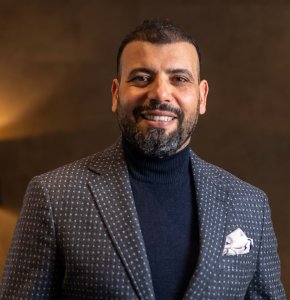
Walid Eljabu

20 жылдар тәжірибе

Dr. Walid Eljabu is triple board-certified in Plastic and Aesthetic Surgery, Hand Surgery, and Trauma Surgery. He has extensive experience in reconstructive and microsurgery. He trained in the UK and Germany, with additional specialist training in Sweden and Turkey. He is the CEO and Head Surgeon at Esthétique du Nord in Hamburg.

He specializes in facial rejuvenation (facelift, rhinoplasty), breast surgery, and body contouring. This includes inverse abdominoplasty.

Accreditation: MRCSEd (Royal College of Surgeons of Edinburgh). Memberships: Rhinoplasty Society of Europe; International Society of Aesthetic Plastic Surgery; German Society of Plastic, Reconstructive and Aesthetic Surgery; American Society of Plastic Surgeons; Royal College of Surgeons of Edinburgh; American Society for Surgery of the Hand; German Society of Hand Surgeons.

расталған

Mahdi Rezai

34 жылдар тәжірибе

Доктор Махди Резаи 21 000-нан астам сүт безі қатерлі ісігімен ауыратын емделушіні емдеді және Германиядағы жетекші сүт безі маманы болып табылады.

  • 1996 жылдан бастап Дюссельдорфтағы Луизенкранкенхаус университеттік ауруханасының Сүт безі орталығының басшысы
  • Минималды инвазивті және сүт безін сақтайтын емдеу әдістеріне маманданған
  • Батыс Германиядағы Сүт безі қатерлі ісігін зерттеу тобының негізін қалаушысы
  • Германия Федеративтік Республикасының Құрмет орденінің иегері
  • Көптеген беделді халықаралық сүт безі қатерлі ісігі ұйымдарының мүшесі

Bookimed науқастарының бейне тарихтары

Vika
In a few hours, I went from being self-conscious to loving my new look.
Процедура: Кеудені ұлғайту
Клиника: Asyaesthetic Clinic
Alona
A beautiful, natural shape and symmetry. Exactly what I wanted!
Процедура: Кеудені ұлғайту
Клиника: Dr. MED
Alina
I went from an A to a B cup, and I’m thrilled with the results!
Процедура: Кеудені ұлғайту

Кеудені ұлғайту: Дейін және кейін фотолары

Барлығын қарау

Осы контентпен бөлісу

Жаңартылды: 05/27/2022
Автор
Анна Леонова
Анна Леонова
Контент-маркетинг бөлімінің басшысы
10 жылдан астам тәжірибесі бар сертификатталған медициналық мәтін авторы, Bookimed контентінің сенімділігі үшін жауапты. Филология ғылымдарының магистрі дәрежесі бар, әлемдік сарапшылармен сұхбат алған.
Фахад Мавлюд
Медициналық редактор, Data Scientist
Жалпы практика дәрігері, жас ғалымдардың 4 ғылыми жұмыс конкурсының лауреаты. Таяу Шығыста жұмыс істеген. Ағылшын және араб тілді дәрігер-координаторлар тобының бұрынғы басшысы. Қазір деректерді талдаумен айналысады және сайттың медициналық редакторы болып табылады.
Фахад Мавлюд Linkedin
Бұл бетте әртүрлі аурулар, емдеу әдістері және әртүрлі елдерде қолжетімді медициналық қызметтер туралы ақпарат болуы мүмкін. Контент тек ақпараттық мақсатта ұсынылғанын және медициналық кеңес немесе нұсқаулық ретінде қарастырылмауы керектігін ескеріңіз. Емдеуді бастамас немесе өзгертпес бұрын дәрігеріңізбен немесе білікті медицина қызметкерімен кеңесіңіз.

Германияда кеудені ұлғайтуға бойынша ЖҚС

Бұл Bookimed арқылы медициналық көмек іздейтін нақты науқастардың сұрақтары. Оларға тәжірибелі дәрігер-координаторлар мен клиникалардың ресми өкілдері жауап береді.

What incision and placement methods are most common in Germany?

German plastic surgeons primarily use inframammary incisions and dual-plane implant placement to ensure natural results. The inframammary approach offers precise surgical access, while dual-plane placement combines submuscular and subglandular techniques to optimize tissue coverage and minimize visible implant edges.

  • Inframammary incision: Most common method involving a 3–4 cm cut within the natural underbust crease.
  • Dual-plane placement: Preferred standard for natural teardrop silhouettes, placing the implant partially under the muscle.
  • Subfascial placement: Growing trend offering faster recovery by positioning implants directly under the muscle fascia.
  • Transaxillary approach: Niche armpit incision used at specialized centers to keep the breast tissue scar-free.

Bookimed Expert Insight: German clinics like Esthétique du Nord in Hamburg often utilize B-Lite lightweight implants paired with microsurgical techniques. This combination is a strategic choice for patients seeking long-term stability, as lighter implants reduce tissue sag over time compared to traditional silicone options.

Patient Consensus: Patients frequently report that the inframammary scar becomes nearly invisible within the breast fold. Most emphasize that consultations focus heavily on achieving a conservative, natural shape rather than dramatic volume.

Will German health insurance cover breast augmentation?

German health insurance generally excludes breast augmentation unless you document a physical medical necessity. Public and private insurers categorize purely cosmetic procedures as elective. You may secure coverage for reconstruction after cancer, severe congenital deformities like tubular breasts, or documented gender-affirming care transitions.

  • Reconstructive surgery: Full coverage is standard following mastectomy or trauma-related breast loss.
  • Congenital deformities: Insurers may approve cases involving Poland syndrome or severe breast asymmetry.
  • Gender-affirming care: Coverage requires completing hormone therapy and psychotherapy per insurance guidelines.
  • Psychological exclusion: German law typically denies coverage for psychological distress without physical malfunction.

Bookimed Expert Insight: Documentation wording is the deciding factor for German insurers. Using terms like reconstruction or correction of deformity rather than cosmetic enhancement significantly improves approval odds. Clinics like Esthétique du Nord in Hamburg provide detailed consultations that help clarify if your specific case meets these strict physical criteria.

Patient Consensus: Many patients find that obtaining pre-authorization is the only way to avoid full out-of-pocket costs. Most successful cases rely on a surgeon's official medical report detailing a physical anomaly rather than emotional suffering.

What is the typical recovery timeline after surgery?

Recovery after breast augmentation in Germany typically includes a 1 day hospital stay for monitoring. Most patients return to light work within 7 to 14 days, while physical activities and heavy lifting are restricted for 6 weeks to ensure proper tissue healing and implant positioning.

  • Initial phase: Expect tightness and chest soreness during the first 3 to 7 days post-surgery.
  • Hospital stay: German clinics like Esthétique du Nord provide 1 day of clinical observation.
  • Physical restrictions: Avoid lifting over 10 pounds or reaching overhead for at least 3 weeks.
  • Final results: Tissues fully settle and implants reach their final position after 3 to 6 months.

Bookimed Expert Insight: While basic packages focus on the surgery, premium options in Germany often include a 3 to 7 day 5-star hotel stay. This is strategic because local surgeons, like triple board-certified Dr. Walid Eljabu, prefer patients to remain nearby during the critical first week for immediate follow-up if needed.

Patient Consensus: Patients find the first week most challenging due to limited arm mobility and sleep discomfort. Many emphasize that while you may look recovered early on, the mental patience required for internal healing is often underestimated.

How can I verify a surgeon’s qualifications in Germany?

Verifying a surgeon in Germany requires checking regional medical chambers called Landesärztekammer. Since Germany lacks a central national registry, you must use state-specific Arzt-Suche directories to confirm an active license (Approbation) and Facharzt specialist designation in plastic and aesthetic surgery.

  • Regional registration: Every surgeon must register with the Landesärztekammer of their specific federal state.
  • Specialist titles: Confirm the title Facharzt für Plastische und Ästhetische Chirurgie for specialized training.
  • Insurance directories: Use Kassenärztliche Vereinigung (KV) portals to verify surgeons billing the public system.
  • Hospital reports: Access Qualitätsberichte via Deutsches Krankenhausverzeichnis to review department volumes and complication rates.

Bookimed Expert Insight: German surgeons often hold multiple certifications across different countries. For instance, Dr. Walid Eljabu at Esthétique du Nord is triple board-certified in plastic, hand, and trauma surgery with credentials from the Royal College of Surgeons of Edinburgh. Checking for international memberships like ISAPS or ASPS alongside German registration provides an extra layer of quality assurance.

Patient Consensus: Patients emphasize looking for a board-certified plastic surgeon rather than a cosmetic doctor. They recommend asking for specific annual caseload numbers and confirming the surgeon personally handles any potential follow-up care.

Can I still breastfeed or undergo breast-cancer screenings after the procedure?

You can safely undergo breast cancer screenings and breastfeed after augmentation in Germany. Surgeons prioritize submuscular placement and inframammary incisions to keep milk ducts and nerves intact. Modern German facilities use specialized displacement mammography and high-precision ultrasound to ensure implants do not compromise diagnostic accuracy.

  • Screening accuracy: Technologists use displacement views to push implants back, maximizing visible natural tissue.
  • Advanced imaging: Clinics like Medical Center Solingen utilize 3D mammography for superior diagnostic precision.
  • Breastfeeding safety: Inframammary incisions under the breast crease typically leave the milk delivery network untouched.
  • Implant placement: Submuscular positioning minimizes interference with glandular tissue compared to placement above the muscle.

Bookimed Expert Insight: While many focus on silicone versus saline, the incision site is actually the critical factor for future nursing. Data suggests that choosing a surgeon like Dr. Walid Eljabu at Esthétique du Nord, who specializes in advanced microsurgical techniques, reduces the risk of nerve damage that can impact milk let-down.

Patient Consensus: Individuals emphasize that while breastfeeding usually succeeds, you must alert mammogram technicians about implants beforehand. Some patients also recommend regular self-exams, noting that any new lumps or changes require immediate clinical evaluation.

What types of breast implants are permitted and considered safe in Germany?

Germany permits cohesive silicone gel and sterile saline implants as the only primary materials for breast augmentation. These devices are strictly regulated as CE Class III medical items under the European Medical Device Regulation. The Federal Institute for Drugs and Medical Devices monitors all permitted variants for safety.

  • Silicone gel implants: Use highly cross-linked, cohesive gel often called gummy bear implants for stability.
  • Saline solution implants: Feature a silicone shell filled with saltwater that the body absorbs if leakage occurs.
  • Surface safety standards: Smooth and nanotextured surfaces are permitted while macro-textured implants are restricted or banned.
  • Mandatory registry tracking: Every procedure must be legally recorded in the National Implant Registry for patient safety.

Bookimed Expert Insight: German clinics like Esthétique du Nord in Hamburg often prioritize premium B-lite implants, which are up to 30% lighter than traditional silicone. This focus on advanced technology aligns with German surgeons’ preference for long-term tissue health and reduced strain on breast ligaments.

Patient Consensus: Patients prioritize cohesive silicone gel for its natural feel and often ask for specific documentation like the official European Implant Passport. There is a strong preference for smooth surfaces to minimize long-term inflammation risks.

Do breast implants need to be replaced after 10 years?

Breast implants do not require automatic replacement after 10 years. While not lifetime devices, the decade mark is a monitoring milestone rather than an expiration date. Modern silicone and saline shells often remain structurally sound for 15 to 20 years without medical intervention or complications.

  • Replacement triggers: Surgery is only necessary for ruptures, capsular contracture, or desired cosmetic changes.
  • Rupture detection: Saline leaks cause visible deflation, while silicone requires ultrasound or MRI monitoring.
  • Shell durability: Modern implants typically retain over 90% of their original tensile strength after 10 years.
  • Monitoring protocol: Surgeons recommend imaging every 2 to 3 years starting at year 5.

Bookimed Expert Insight: German clinics like Esthétique du Nord often utilize lightweight B-lite implants, which reduce long-term tissue sagging compared to standard silicone. Choosing advanced materials or non-implant fat transfer, which averages $8,000 in Germany, can eliminate the need for future implant-related revision surgeries entirely.

Patient Consensus: Many patients regret believing the 10-year myth and wish they knew implants often last much longer. They emphasize choosing surgeons who provide clear, long-term follow-up plans to monitor for silent ruptures.

Where are the incisions typically made and how visible are the scars?

Breast augmentation incisions in Germany are typically placed in the inframammary fold or around the areolar edge to minimize visibility. Surgeons like Dr. Walid Eljabu use advanced techniques to ensure scars settle into natural skin creases, typically fading into thin, faint lines within 6 to 12 months after surgery.

  • Inframammary incision: Placed under the breast fold, hiding scars within the natural lower crease.
  • Periareolar incision: Made around the nipple edge, blending with the natural pigmentation transition.
  • Scar maturation: Initial redness fades over months, eventually becoming difficult to detect.
  • German standards: Clinics in Hamburg and Nuremberg utilize meticulous suturing for optimal healing.

Bookimed Expert Insight: While many focus on scar location, the choice of implant often dictates the incision length. Packages at Esthétique du Nord featuring B-Lite lightweight implants are popular because these implants can sometimes be inserted through slightly smaller, more refined incisions than traditional silicone, potentially reducing the final scar footprint.

Patient Consensus: Patients emphasize that the inframammary approach is the most discreet option for most body types. While scars appear red initially, they consistently report that the lines become nearly invisible once they reach the one-year mark.
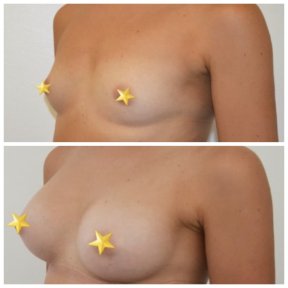
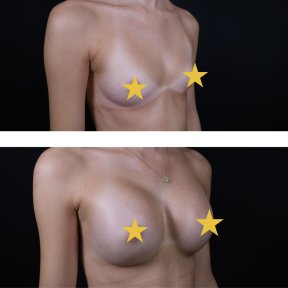
Should the implant be placed over or under the chest muscle?

Choosing implant placement depends on your anatomy and desired look. Under the muscle placement provides natural results and reduces visible rippling for thin patients. Over the muscle placement offers a faster recovery and is ideal for women with sufficient natural tissue or active lifestyles.

  • Submuscular placement: Provides superior long-term support and masks implant edges in petite patients.
  • Subglandular placement: Sitting entirely above the muscle, this technique prevents distortion during heavy chest exercise.
  • Recovery time: Over the muscle placement leaves chest muscles intact, ensuring a faster return to work.
  • Advanced options: German clinics specialized in breast health also offer natural fat transfer and B-lite implants.

Bookimed Expert Insight: German surgeons like Walid Eljabu at Esthétique du Nord carry rare triple board certifications. This anatomical expertise is crucial when navigating complex dual-plane placements. We see many patients choosing Germany specifically for this high level of surgical precision and microsurgical background.

What is the typical recovery timeline after breast-augmentation surgery in Germany?

Recovery from breast augmentation in Germany typically requires 6 to 8 weeks for structural healing, with final aesthetic settling taking 12 months. Patients usually resume desk work within 5 to 7 days, though German surgeons strictly prohibit driving for 14 days and heavy lifting for 6 weeks.

  • Hospital stay: Most clinics require 1 night for observation following general anesthesia.
  • Activity restrictions: Heavy lifting over 3 kg and arm elevation are restricted for 4 weeks.
  • Support garments: A compression bra and Stuttgart belt are mandatory 24/7 for 6 weeks.
  • Final results: Breasts undergo drop and fluff maturation over 3 to 12 months.

Bookimed Expert Insight: German clinics like Esthétique du Nord often prioritize premium B-Lite implants, which are 30% lighter than standard silicone. This weight reduction can positively impact long-term recovery by reducing strain on breast tissue and potentially slowing natural sagging over time.

Patient Consensus: Many find the first 3 to 7 days surprisingly difficult for basic tasks like bathing or dressing. They recommend planning for help at home as limited arm mobility is standard during the first week.

Do breast implants need to be replaced every 10 years?

Modern breast implants do not require automatic replacement every 10 years. While the FDA labels them as non-lifetime devices, high-quality silicone and saline implants frequently last 20 years or longer. Revision is only necessary if medical complications arise or you desire an aesthetic change in size or shape.

  • Annual monitoring: Yearly physical exams by a surgeon help detect early signs of shell wear.
  • Imaging protocols: FDA guidelines recommend an initial ultrasound or MRI after 5 to 6 years.
  • Silent ruptures: Recurring screenings every 2 to 3 years identify leaks in cohesive silicone gels.
  • Replacement triggers: Immediate surgery is indicated for capsular contracture, implant rupture, or visible deflation.

Bookimed Expert Insight: German clinics like Esthétique du Nord often utilize B-Lite lightweight implants to reduce long-term tissue strain. Our data shows that high-volume centers led by triple board-certified surgeons like Dr. Walid Eljabu focus on advanced microsurgical techniques. This precision helps minimize early scar tissue formation, which is a primary reason for premature implant replacement.

Patient Consensus: Many patients report their implants remaining intact and comfortable well beyond the 10-year mark. The prevailing sentiment highlights that monitoring through regular imaging is more vital than a fixed surgical deadline.

Тегін консультация алу

Қолайлы байланыс тәсілін таңдаңыз