

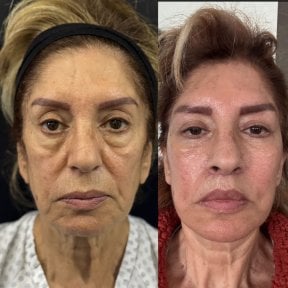

The main difference lies in tissue handling: a traditional SMAS facelift separates the skin from the muscle to tighten them independently, while a deep plane facelift repositions the skin, fat, and muscle as a single unit. This latter technique releases deep ligaments to provide a more natural mid-face lift.
- Anatomical depth: Deep plane surgery works beneath the muscle layer to release tethering facial ligaments.
- Mid-face results: Deep plane techniques effectively lift sagging cheeks and soften deep nasolabial folds.
- Tension levels: Repositioning deeper layers reduces tension on the skin, resulting in finer, flatter scars.
- Aesthetic longevity: Deep plane results typically last 10–15 years, significantly outperforming traditional SMAS approaches.
Bookimed Expert Insight: Many patients focus solely on price, but technique dictates your long-term value. Dr. Alexandro Aguilera in Mexico City has performed over 3,000 procedures, highlighting how specialist experience matters more than the label. While deep plane packages at clinics like Marroquín & Sandoval cost around $9,600, they often include 9 hotel nights because the deeper dissection requires more initial monitoring than a standard lift.
Patient Consensus: Patients emphasize verifying if a surgeon performs a true deep plane or just a variation. Many report that direct WhatsApp communication with Mexican medical teams provides faster support than they typically experience in the US.